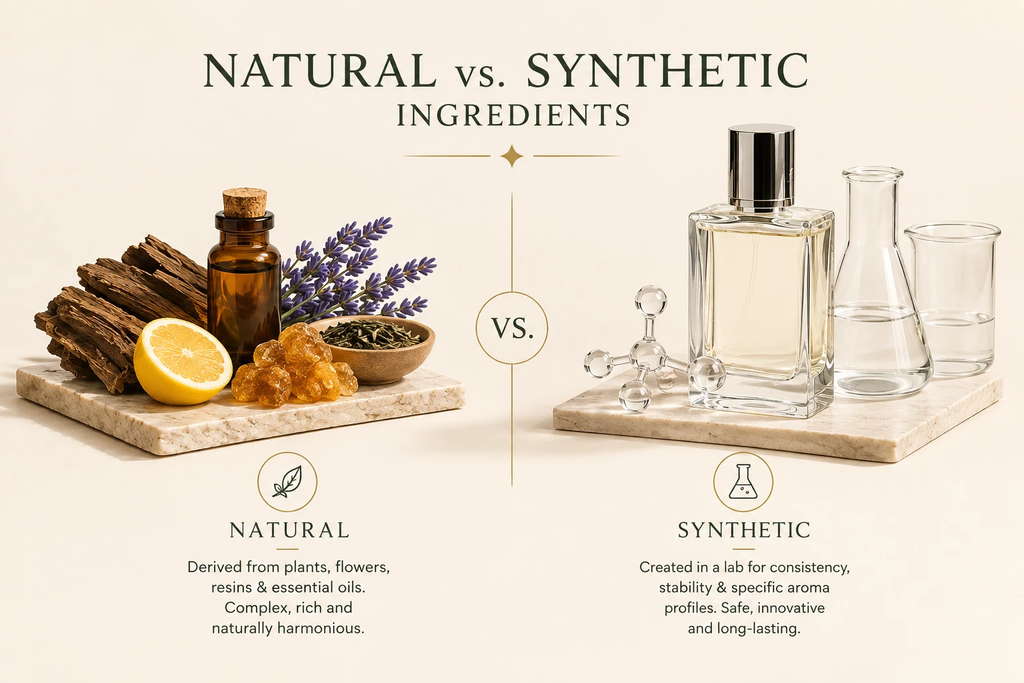
When choosing a perfume, many people look for terms like “natural,” “organic,” or “synthetic-free.” But what do these terms actually mean? Fragrances can contain ingredients derived from plants, ingredients created through modern chemistry, or a combination of both. Understanding the difference between natural and synthetic fragrance ingredients can help you make a more informed choice when buying a perfume.
What Are Natural Fragrance Ingredients?
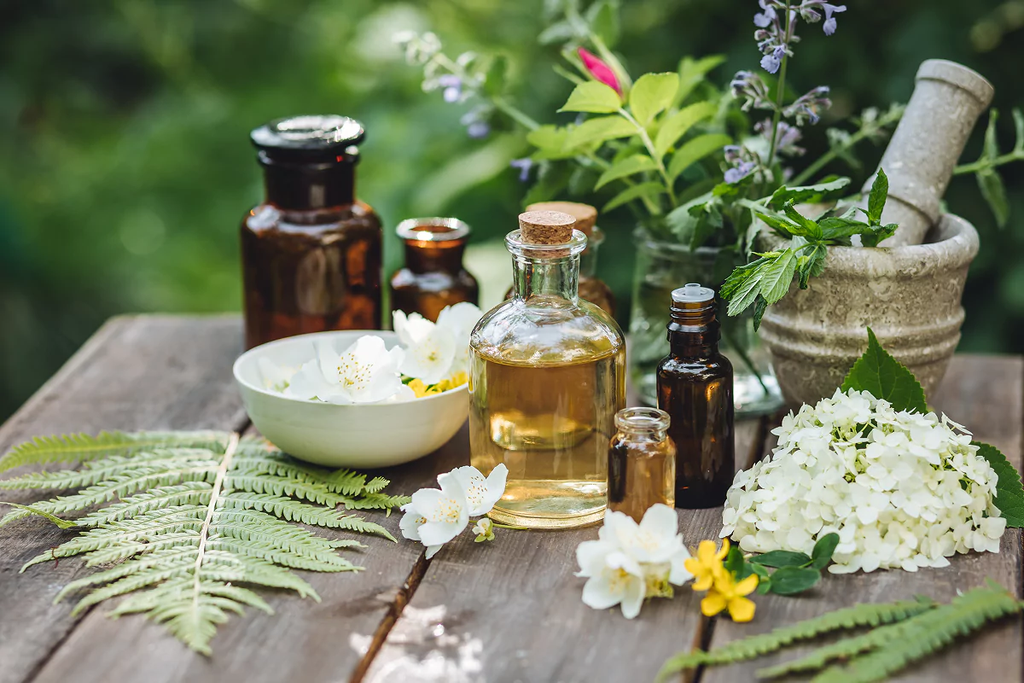
Natural fragrance ingredients are obtained from natural sources such as flowers, fruits, leaves, woods, spices, herbs, and resins. They are commonly extracted through processes such as steam distillation, cold pressing, solvent extraction, or expression.
For example, lavender can provide a fresh floral aroma, while citrus peels can be used to create bright and refreshing notes. Sandalwood, rose, vanilla, and patchouli are other popular natural fragrance materials.
Natural ingredients are often appreciated for their complex and distinctive aroma. However, their availability and scent profile can vary depending on factors such as climate, soil, harvesting methods, and the quality of the raw material.
What Are Synthetic Fragrance Ingredients?
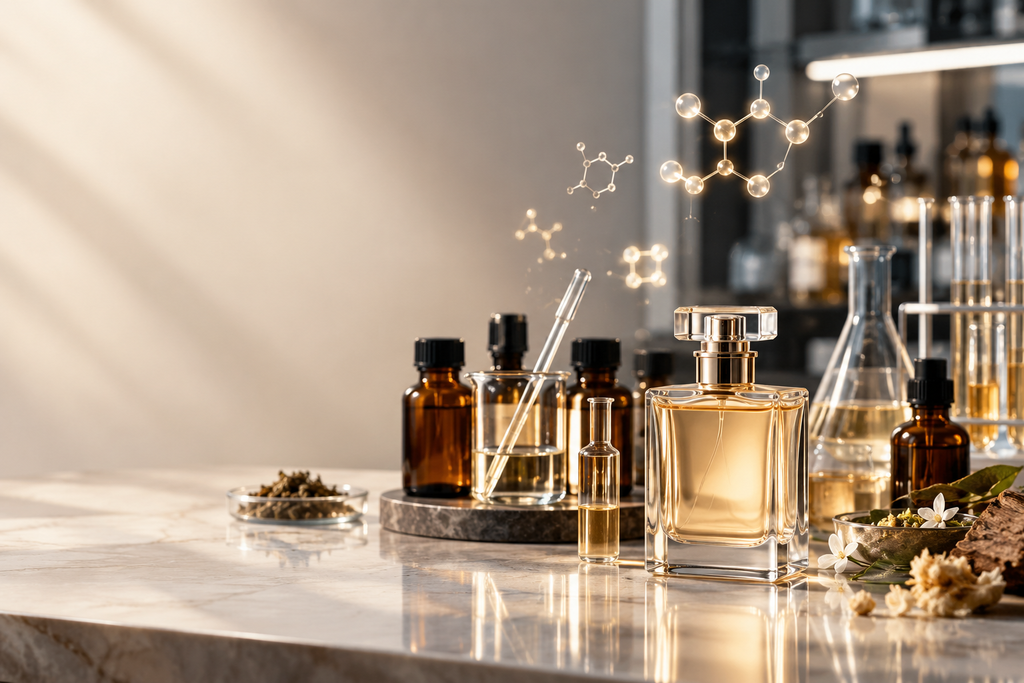
Synthetic fragrance ingredients are aroma molecules created through chemical processes. They can be designed to reproduce aromas found in nature or create completely new scent profiles that may be difficult or impossible to obtain directly from natural materials.
Synthetic ingredients are widely used in modern perfumery because they provide consistency, stability, and creative flexibility. Some can also help a perfume last longer or give it greater projection.
Importantly, “synthetic” does not automatically mean “harmful.” Safety depends on the specific ingredient, its concentration, and how it is used. Fragrance materials used commercially are generally subject to safety standards and regulations.
Natural vs Synthetic: Key Differences
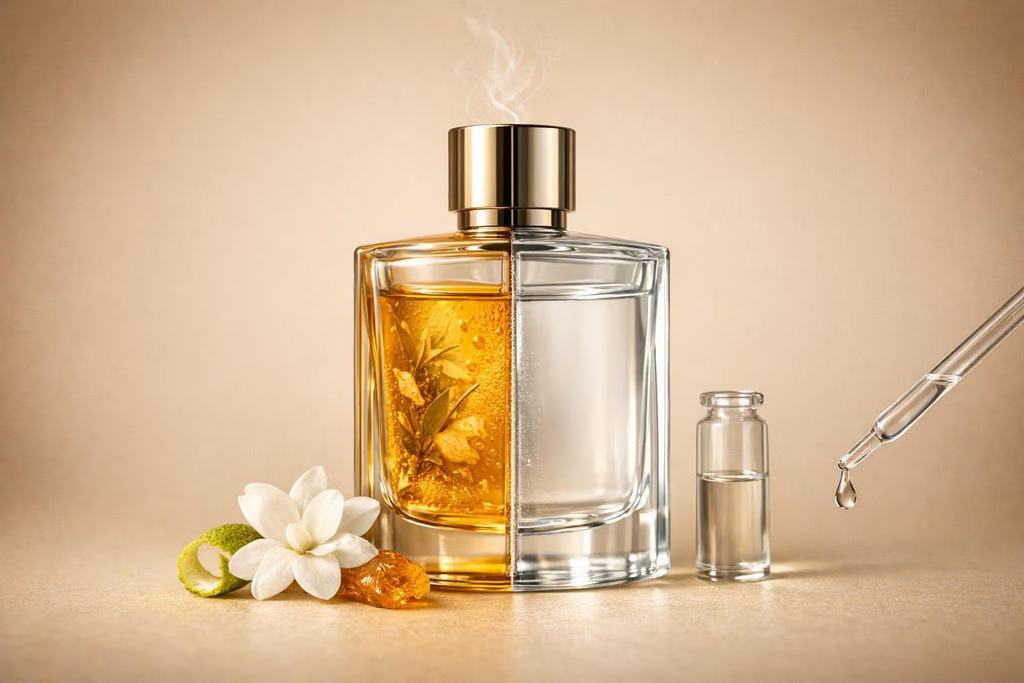
One of the biggest differences is source. Natural ingredients come from natural raw materials, while synthetic ingredients are produced through chemical processes.
Another difference is consistency. Natural extracts can vary from batch to batch because plants and other natural materials naturally change. Synthetic aroma molecules can offer a much more consistent scent.
Sustainability is another important consideration. Natural does not automatically mean environmentally friendly. Producing large quantities of certain natural ingredients may require significant land, water, or plant resources. In some cases, synthetic alternatives can reduce pressure on natural resources.
There is also a difference in scent possibilities. Synthetic ingredients allow perfumers to create unusual, innovative, and highly precise aromas. Natural materials, meanwhile, can provide rich and naturally complex characteristics.
Why Do Perfumes Use Both?
Many modern perfumes combine natural and synthetic ingredients to achieve a balanced fragrance experience. A perfumer may use natural citrus oils for freshness while incorporating synthetic aroma molecules to improve stability or add depth.
This combination allows perfumers to create fragrances that are unique, long-lasting, consistent, and enjoyable.
For a unisex perfume, this approach can be particularly useful. Fresh citrus, aromatic herbs, woods, musk, florals, and amber accords can be blended to create a scent that appeals to different preferences without being restricted to traditional gender-based fragrance categories.
Which One Should You Choose?

There is no universal answer to whether natural or synthetic fragrance ingredients are better. Your choice should depend on your personal preferences, fragrance style, ingredient sensitivities, performance expectations, and values.
If you enjoy the complexity of botanical extracts, perfumes featuring natural ingredients may appeal to you. If you prioritize consistency, innovative scent profiles, and performance, fragrances containing synthetic aroma molecules may be worth exploring.
Ultimately, a good perfume is about how the complete composition smells and performs on your skin—not simply whether its ingredients are labeled natural or synthetic.
Final Thoughts
Natural and synthetic fragrance ingredients each have an important place in modern perfumery. Natural materials bring character and connections to the natural world, while synthetic ingredients provide perfumers with consistency, innovation, and a wider creative palette.
For fragrance lovers, understanding both categories makes it easier to explore perfumes with confidence and find a scent that matches their personality and lifestyle.